
For years, autonomous trucking has occupied a strange space in the industry conversation. Always five years away, always “coming soon,” always the kind of thing that shows up in conference keynotes but rarely in dispatch decisions. That’s changing.
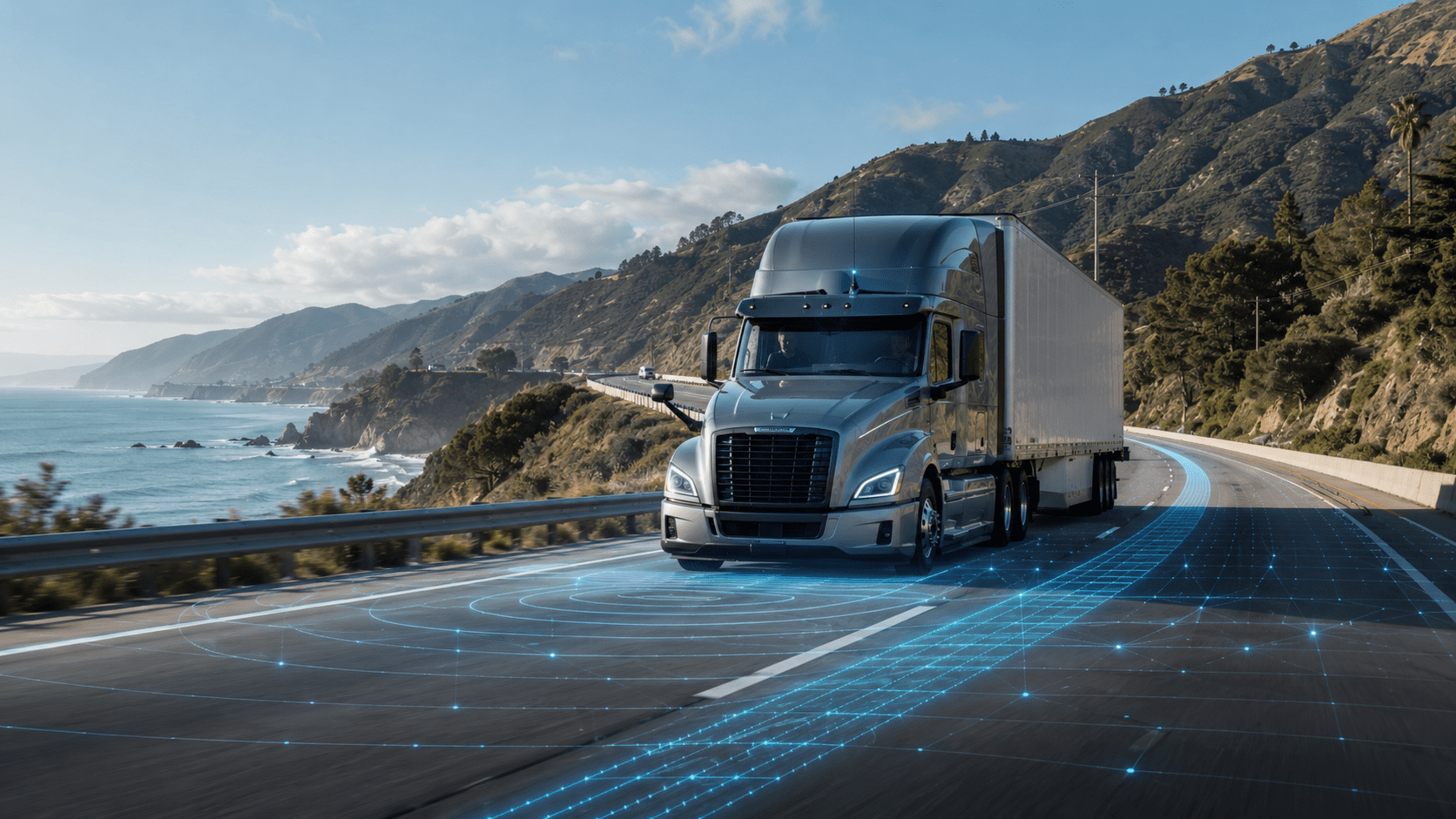
California recently approved new autonomous vehicle regulations that open the door for heavy-duty autonomous trucks to test and eventually deploy on public roads, and that matters in ways that go well beyond one state’s rule-making. While Texas, Arizona, and Arkansas have been the more active proving grounds for this technology, California had remained a major question mark. Now it’s not.
The new rules don’t mean driverless semis are about to flood California highways. But they create a formal, structured pathway for autonomous heavy-duty vehicles over 10,001 pounds to apply for DMV-approved testing and deployment permits, something that wasn’t possible before. For an industry already grinding through driver shortages, rising operating costs, safety scrutiny, and tighter margins, that shift is worth paying close attention to.
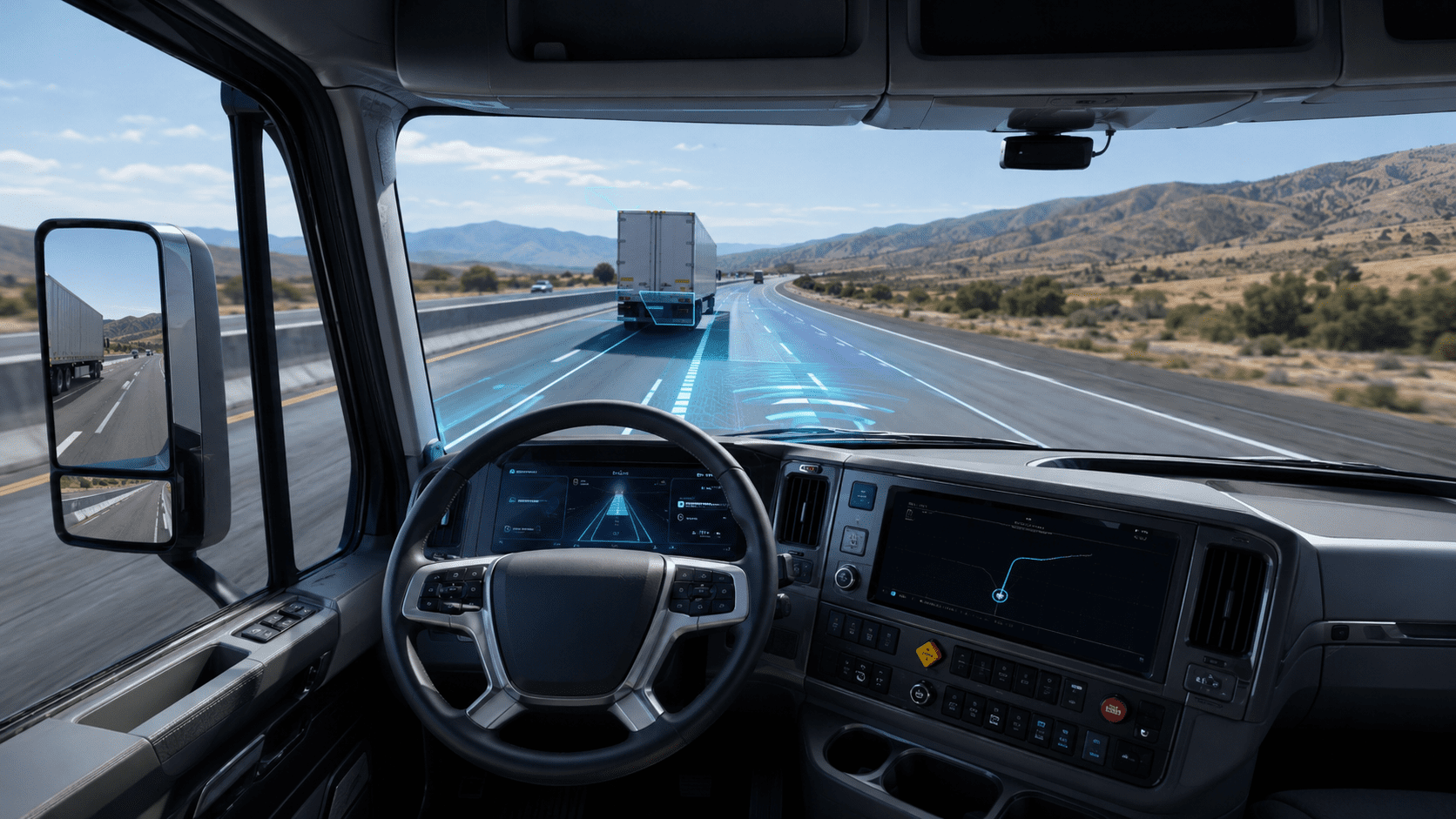
More than anything, it shows where trucking is headed. AI is no longer just showing up in dispatch software, route optimization, predictive maintenance, or back-office workflows. It’s now moving directly into the vehicle itself.
Why California Is Suddenly in the Spotlight
On April 28, 2026, the California DMV announced the adoption of comprehensive new autonomous vehicle regulations covering both light-duty and heavy-duty vehicles. The updated rules strengthen oversight, expand reporting requirements, and for the first time allow larger autonomous vehicles, including freight trucks and transit vehicles, to pursue testing and deployment in the state.
That’s a significant shift. Heavy-duty autonomous trucks had previously faced tighter restrictions in California compared with most other states. The new framework lays out a staged process: testing with a safety driver first, then driverless testing, and eventually commercial deployment, but only after clearing the state’s requirements. Heavy-duty vehicles must complete 500,000 miles of testing at each phase before advancing and must submit a comprehensive safety case for DMV review. They’re also still required to stop at CHP weigh stations and comply with all applicable state and federal commercial motor vehicle requirements. The new rules open a door. They don’t remove the guardrails.
This is also the result of a years-long political fight. In 2023, California lawmakers passed AB 316, a bill that would have required a human safety operator in any autonomous heavy-duty truck operating on public roads. Governor Newsom vetoed it, arguing in his veto message that “existing law provides sufficient authority to create the appropriate regulatory framework.” The new DMV regulations are the follow-through on that position. Not deregulation, but a structured, oversight-heavy framework that replaces a de facto ban with a defined path forward.
That’s why California is getting attention right now. The state has moved from resistance and political debate into a formal regulatory structure. For the industry, that’s a meaningful marker.
Autonomous Trucking Is Already Running Elsewhere
California may be the current headline, but it’s not where this story started.
Texas has become the most important state for autonomous freight development. Aurora launched commercial driverless trucking operations on the Dallas-to-Houston I-45 corridor in May 2025, becoming the first company to operate a fully driverless Class 8 trucking service on public roads in the U.S. Gatik has driverless trucks commercially deployed across Texas, Arkansas, Arizona, Nebraska, and Ontario. Torc Robotics is testing on I-35 in Texas and has established an autonomous hub in the Dallas-Fort Worth area. These aren’t pilot projects on closed courses. They’re revenue-generating operations on public highways.
As of early 2025, roughly 24 states, including Arizona, Florida, and Texas, allowed self-driving trucks to operate on public roads. California, until now, was among those with the tightest restrictions.
That’s one of the most important things carriers should understand: autonomous trucking isn’t arriving evenly across the country. It’s rolling out state by state, corridor by corridor, and permit by permit. A carrier operating in California faces a very different regulatory picture than one operating out of Dallas or Phoenix. That patchwork is real, and it’s going to complicate planning for fleets that cross multiple state lines.
Why State Law Matters So Much Here
Autonomous trucking sits at the intersection of federal and state authority, and both layers matter.
At the federal level, FMCSA has been working on a regulatory framework for commercial vehicles equipped with automated driving systems since 2018, when it first issued an advance notice of proposed rule-making. That process is ongoing, with a Notice of Proposed Rule-making covering ADS-equipped commercial vehicles in development, focused on updating safety regulations that were written with a human driver in mind. NHTSA, meanwhile, has crash reporting requirements in place for vehicles equipped with automated driving systems and has been conducting system-level safety research on ADS-equipped vehicles.
But states still hold enormous influence over the practical picture. They control road access, permitting, licensing, insurance requirements, traffic enforcement, testing rules, and deployment conditions. Two autonomous trucks running identical technology could face very different requirements depending on which state they’re in. One requiring a safety driver, another allowing fully driverless operations, another not yet having addressed the question at all.
For carriers, this creates a new kind of compliance challenge. It’s not enough to ask whether autonomous trucking is legal in the United States. The better question is: Where is it legal, under what conditions, and who’s responsible when something goes wrong?
Compliance Doesn’t Go Away. It Gets More Complicated.
There’s a common assumption that automation makes compliance simpler. More likely, autonomous trucking makes compliance more complicated before it makes anything easier.
Even if the vehicle drives itself, someone still owns the operation. Someone still has to maintain the equipment, meet insurance requirements, understand state permit conditions, comply with federal safety rules, and manage enforcement expectations. California’s new regulations make this explicit. They establish a formal process for law enforcement to issue citations to AV manufacturers when their vehicles commit moving violations, require annual updates to first responder interaction plans, mandate two-way communication links with 30-second response times, and require companies to respond to incidents.
The practical questions that follow are real and not yet fully resolved:
- Who’s responsible if an autonomous truck receives a traffic citation?
- How does a roadside inspection work when there’s no driver in the cab?
- What records must be maintained for the automated driving system?
- How do weigh station requirements apply?
- Who communicates with law enforcement or first responders after an incident?
- How are crashes reported, and to whom?
- How do insurers evaluate risk and set rates for ADS-equipped vehicles?
- How does a carrier demonstrate the vehicle was operating within the terms of its permit?
These are the kinds of questions regulators, manufacturers, carriers, and insurers are actively working through. FMCSA has specifically flagged the challenge of conducting roadside inspections on Level 4 or 5 ADS-equipped trucks, noting that the agency is “soliciting comment to better inform its rule-making proposals in the areas of inspection and maintenance of ADS-equipped CMVs.”
California’s new framework is an early indicator of how regulators are approaching all of this. The answer isn’t deregulation. It’s regulated automation, with more oversight, not less.
This Is About More Than Driverless Trucks
Autonomous trucks get the headlines, but AI is already affecting trucking in ways that don’t involve removing the driver from the cab.
Many carriers are already working with AI-driven tools for route optimization, predictive maintenance, dispatch automation, driver behavior monitoring, safety scoring, fraud detection, document processing, compliance alerts, and back-office workflow automation. These aren’t future-state technologies. They’re in active use at carriers of all sizes right now.
For most fleets, these tools will become part of daily operations long before they ever touch a driverless truck program. The driver shortage alone, estimated at between 60,000 and 82,000 unfilled positions as of 2025, with the American Trucking Associations projecting a need to hire 1.2 million new drivers over the next decade, creates real business pressure to find operational leverage wherever it exists.
The companies that get ahead of this understand that AI isn’t just coming to the big players. It’s becoming part of how trucking companies handle safety, compliance, maintenance, dispatch, hiring, billing, and customer service across the board. Getting familiar with it now, and understanding the regulatory obligations that come with it, is the work that separates carriers who lead through this transition from those who scramble to catch up.
What Carriers Should Be Watching
Most traditional carriers don’t need to worry about autonomous trucks replacing their core operations overnight. But paying attention to where this is going is just good business. Specific areas worth tracking:
- Whether your operating states allow autonomous commercial vehicle testing or deployment, and under what conditions
- Whether a human safety operator is required, and how that requirement could change
- Permit requirements for autonomous or AI-assisted heavy-duty vehicles in your lanes
- How crash reporting and incident documentation rules apply to ADS-equipped vehicles
- How roadside inspection and weigh station requirements are being interpreted
- How your insurance carrier is responding to autonomous and AI-assisted operations
- Whether FMCSA updates its commercial vehicle safety rules to address vehicles without traditional human drivers
- How AI tools are being used in safety, maintenance, dispatch, and compliance workflows across the industry
This is also a smart moment to get your existing compliance house in order. Technology is changing fast, but regulators haven’t stopped caring about records, authority, insurance, inspections, maintenance, safety performance, and operational responsibility. If anything, those areas are likely to get more scrutiny as the technology scales. Autonomous trucking may change who, or what, is driving the truck. It doesn’t eliminate accountability for how that truck is operated.
The Bottom Line
California’s new autonomous trucking regulations aren’t a minor state transportation update. They’re a signal that autonomous freight is moving from concept to regulated reality, and that the compliance burden is moving right along with it.
The industry is entering a period where AI will become more common, more practical, and more tightly tied to operating requirements. Some of that change will happen inside the cab. Some of it will happen in the back office. And a lot of it will happen through state and federal rule-making that most carriers aren’t watching closely enough.
Autonomous trucking is no longer hypothetical. Neither is the compliance work that comes with it. The future of trucking won’t just belong to the companies with the best technology. It’ll belong to the ones that know how to run that technology legally, safely, and responsibly.
![[WEBINAR] What the Broker Liability Ruling Means for Your Next Load](https://uscomplianceservices.org/wp-content/uploads/2026/07/Broker-Liability-Ruling-768x284.png)